Proudly serving Phoenix, Glendale, Scottsdale, Tempe, Mesa, Chandler & surrounding areasCall or Text 24/7: 480-243-9053

Upright, Chest & Commercial Freezer Repair, Sealed System Testing & Maintenance in Phoenix, AZ

Phoenix Appliance Repair Co. provides freezer repair across Phoenix for upright, chest, and walk-in units in homes and restaurants. We diagnose cooling failures, compressor and sealed-system problems, frost buildup, drain leaks, door-seal issues, and freezer-integrated ice maker faults. Our broader appliance service also covers refrigerator, washer, dryer, dishwasher, oven, stove range, microwave, and garbage disposal repair. We explain each repair option and its cost before opening a panel.

Phoenix summers push ambient temperatures past 110°F for weeks at a time, adding heat load to refrigeration systems across the Salt River Valley. Dry, dusty air can burden condenser and evaporator coils, while prolonged heat can crack and shrink door gaskets. Monsoon-season moisture can also drive frost buildup when a seal leaks. Our technicians use gauges, clamp meters, and component-by-component testing to identify the cause instead of guessing.

We work under EPA Section 608 refrigerant-handling procedures, source OEM and OEM-equivalent components, and service both residential and restaurant equipment. Same-day and next-day scheduling is prioritized whenever the route allows.

Phoenix Appliance Repair Co. provides freezer repair throughout Phoenix, Scottsdale, Tempe, Mesa, Glendale, Chandler, and the greater Maricopa County metro area.

★ ★ ★ ★ ★4.9/5 Average Rating · 20+ Years of Experience · Thousands of Customers Helped · Licensed & Insured · Residential & Commercial

Freezer Repair Options & Benefits

What Does Freezer Repair Include?

A freezer repair visit should assess the sealed system, electrical controls, cabinet insulation, coils, door seals, and defrost circuit. That full-system view helps distinguish one failed component from symptoms caused by several interacting issues.

Technicians test compressor amperage, start capacitors, overload relays, windings, thermostat resistance, defrost heaters, timers, and bi-metal thermostats against the applicable manufacturer specifications. Drain paths and fan or motor noises are checked when leaking, frost, or unusual sounds are part of the complaint.

Prompt diagnosis matters because a freezer that runs warm for even a few hours can spoil hundreds of dollars in food. It can also keep the compressor running nonstop, shortening component life and increasing electricity use.

Benefits of Professional Freezer Repair

Professional freezer diagnostics connect the visible symptom to measured results throughout the appliance. That supports a focused repair recommendation instead of a series of speculative parts replacements.

  • Sealed-system pressure and refrigerant-charge evaluation
  • Electrical testing with a clamp meter and multimeter
  • Evaporator and condenser coil dust-load inspection
  • Door-gasket, hinge, and perimeter-contact checks
  • Defrost heater, timer, and bi-metal thermostat testing
  • Drain-hole, drain-tube, and drain-pan inspection
  • Manufacturer-specified OEM or OEM-equivalent components
  • Repair options and costs explained before work begins
Phoenix Freezer Services

Phoenix Freezer Repair Services

Our freezer repair services follow symptoms from power and controls through airflow, defrost, drainage, insulation, and the sealed system. Each recommendation is based on measured component results and the freezer model rather than a one-size-fits-all parts swap.

Freezer Not Cooling Diagnostics

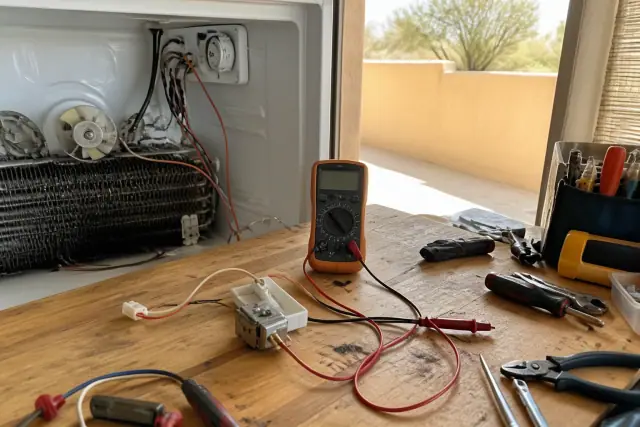
Freezer thermostat wiring diagnostic with a digital multimeter on a workbench in Phoenix, AZ.

When the interior light works but cooling does not, we trace the cooling circuit through the start relay, thermal overload, compressor, thermostat or sensor, and electronic control board. Resistance, voltage, and run-signal checks identify which component has actually failed.

Request Estimate

Compressor & Sealed-System Repair

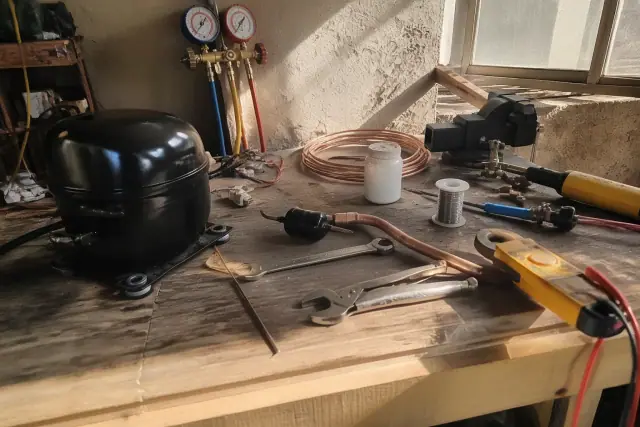
Technician repairing a freezer compressor on a workbench in Phoenix, AZ, with tools and copper tubing.

A compressor that cycles for hours without shutting off may be reacting to dirty coils, a weak start relay, or a deeper sealed-system fault. We test start capacitors, overload relays, and windings before recommending replacement, because a $40 relay can mimic a $400-plus compressor problem.

Request Estimate

Defrost System Repair

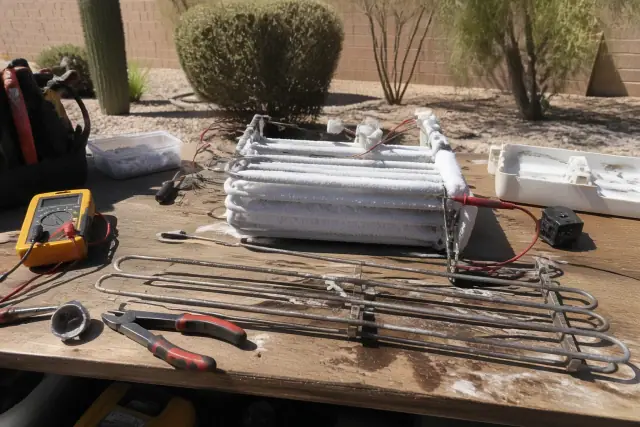
Multimeter testing a frost-covered freezer evaporator coil on a workshop workbench in Phoenix, AZ.

Heavy frost can originate with a burned-out defrost heater, stuck timer, failed bi-metal thermostat, or a leaking door seal. We test each part of the defrost circuit individually and address the cause instead of simply removing the ice.

Request Estimate

Drain & Leak Repair

Plumbing tools and cloths inside an under-counter cavity during a freezer leak repair in Phoenix, AZ.

Water beneath or inside a freezer can come from a clogged drain hole, cracked drain pan, disconnected tube, or damaged gasket. We trace meltwater from the evaporator to the pan, clear blockages with a warm-water flush or flexible probe, and repair the failed segment.

Request Estimate

Door Seal & Alignment Repair

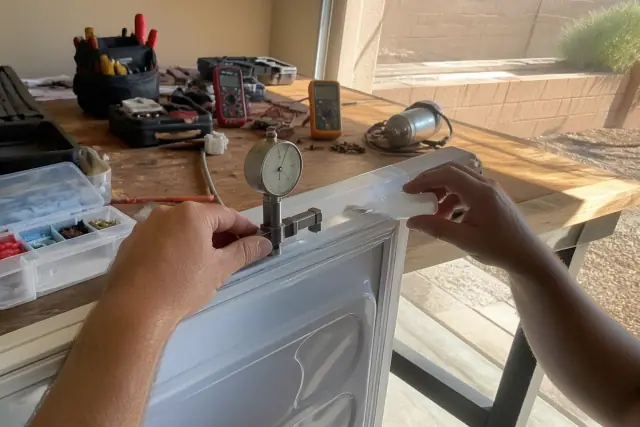
Technician repairing a freezer door gasket with a tension gauge in a Phoenix, AZ workshop.

Phoenix heat can crack or shrink gaskets over time, and seal-replacement requests are common on units past the five-year mark. We fit model-specific gaskets, adjust dropped hinges, and repair retaining strips or mounting channels so the door contacts evenly around its perimeter.

Request Estimate

Freezer Ice Maker Repair

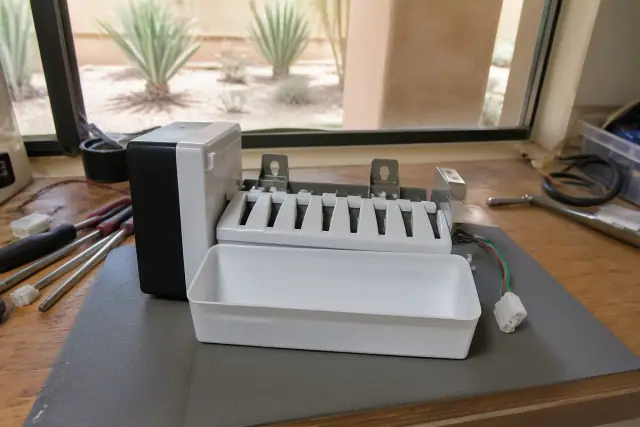
A technician repairing a freezer ice maker on a workbench in Phoenix, AZ, with desert landscaping visible through a window.

Freezer-integrated ice maker service can include the module, sensing thermostat, fill valve, water line, auger motor, and ejector mechanism. We also clear mechanical jams and mineral scale that can restrict fill water or leave ice clumped in the mold.

Request Estimate
Freezer Repair Options

Freezer Types We Repair

We service upright freezers, chest freezers, walk-in units, garage-located appliances, and freezer-integrated ice makers. The diagnostic emphasis changes with cabinet design, operating environment, controls, and access to drain or sealed-system components.

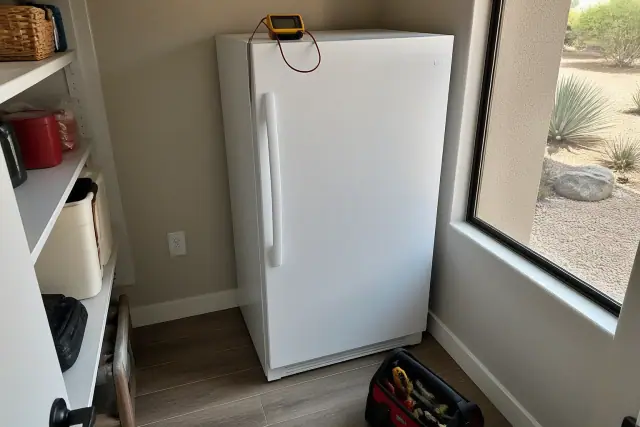
Upright freezer in a Phoenix, AZ pantry with a multimeter on top and a small tool kit on the floor.

Upright Freezer Repair

Upright units depend on even door contact and a working defrost circuit because cold air can escape quickly through a vertical gasket gap. We inspect the cold control, door hardware, mounting channel, and frost pattern before choosing the repair.

  • Cold control thermostat and sensor testing
  • Defrost heater, timer, and bi-metal checks
  • Model-specific door gasket replacement
  • Hinge and door-alignment adjustment
  • Retaining-strip and mounting-channel repair
Request Estimate
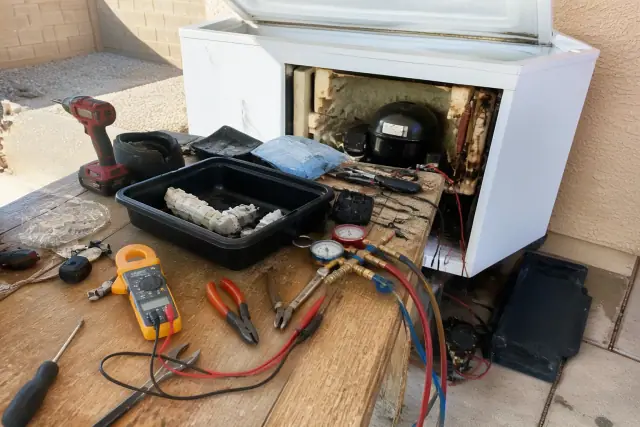
Technician repairing a chest freezer with tools and testing equipment on a workbench in Phoenix, AZ.

Chest Freezer Repair

Chest freezers hold cold air efficiently, but lid seals, foam gaskets, drains, and sealed-system parts still wear or clog. Garage placement also makes ambient temperature and ventilation important parts of the diagnosis.

  • Compressor and start-relay diagnostics
  • Lid gasket and foam-seal service
  • Drain-hole clearing and tube inspection
  • Sealed-system leak pressure testing
  • Garage operating-environment review
Request Estimate
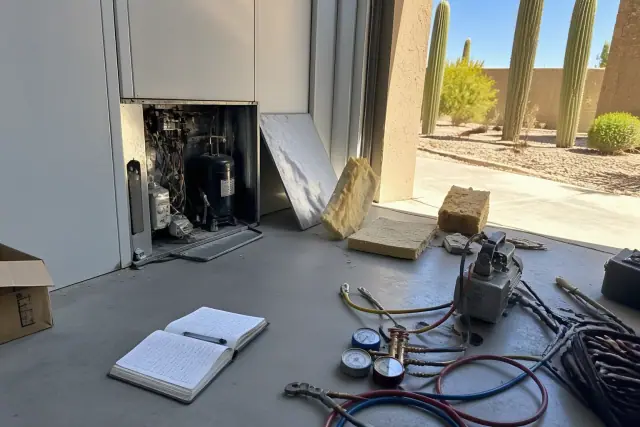
Technician repairing a walk-in freezer compressor with diagnostic tools on a concrete floor in Phoenix, AZ.

Walk-In Freezer Repair

Walk-in freezers behind restaurant kitchens require coordinated checks of the compressor, coils, refrigerant circuit, controls, insulation, and door seals. Pressure and electrical readings help distinguish a sealed-system fault from an airflow or control problem.

  • Compressor amperage and winding tests
  • Evaporator and condenser coil inspection
  • Refrigerant leak-point detection
  • Section 608 recovery and recharging procedures
  • Cabinet insulation and door-seal checks
Request Estimate
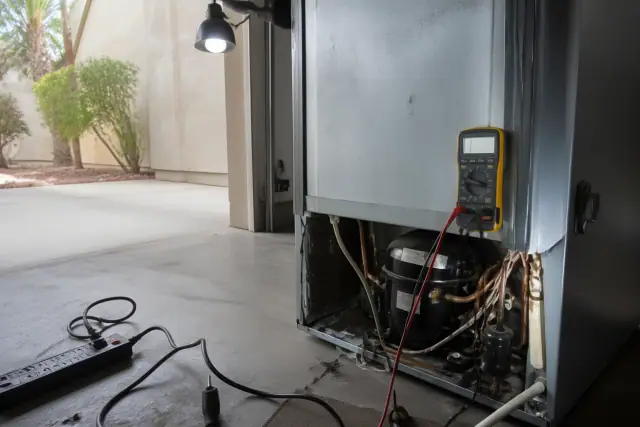
Technician using a multimeter to diagnose a freezer in a garage service bay in Phoenix, AZ.

Garage Freezer Diagnostics

Uninsulated Phoenix garages can reach 120°F in summer, above the rated operating range of some appliances. We compare the unit rating with ambient conditions and review placement, ventilation, coil dust, gasket condition, and compressor run behavior.

  • Rated operating-range review
  • Placement and ventilation recommendations
  • Condenser coil dust-load inspection
  • Gasket cracking and shrinkage checks
  • Extended compressor duty-cycle diagnosis
Request Estimate
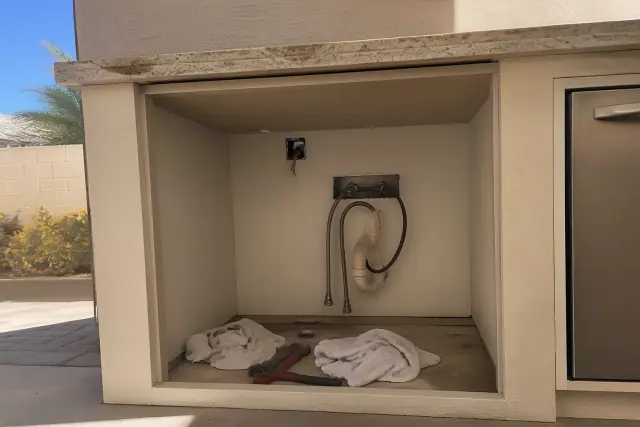
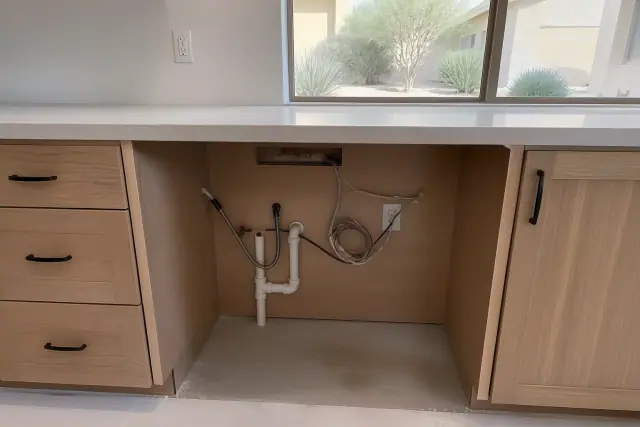
Recessed under-counter space with plumbing and electrical for an ice maker installation in a Phoenix, AZ home.

Freezer-Integrated Ice Maker Service

Integrated ice makers combine temperature sensing, water delivery, timing, and mechanical ejection inside the freezer. Testing each part helps separate a supply restriction from a control or mechanical failure.

  • Ice maker module and thermostat testing
  • Fill-valve and water-line service
  • Auger motor and ejector-arm checks
  • Mineral-scale flushing and valve replacement
  • Ice-bridge and mold-jam correction
Request Estimate
Accurate Freezer Diagnosis

Why Choose Our Freezer Repair Approach

Freezer symptoms often overlap: a warm cabinet can begin with a seal, relay, control, airflow, or refrigerant problem. By testing the relevant components in sequence, we can explain what failed and why the proposed repair fits the measured condition.

Methodical Component Testing

Gauges, a clamp meter, and a multimeter help separate control, motor, defrost, and sealed-system faults. We test individual parts before condemning an assembly or compressor.

EPA Section 608 Refrigerant Procedures

For low charge or sealed-system leaks, our technicians follow EPA Section 608 recovery and charging procedures. We pressure-test the system, repair the leak point, and recharge to the manufacturer-specified weight instead of merely topping it off.

Clear Repair Options and Costs

We explain the diagnosis and cost before opening a panel or starting repair work. The diagnostic fee is quoted upfront and applied toward the repair when you proceed, and major compressor work is compared with the cost of a comparable replacement freezer.

Know the Warning Signs

Common Freezer Problems We Diagnose

Freezer failures often start as longer run times, a small gasket gap, a little frost, or slow drainage. An early diagnostic can identify the component behind the symptom before food loss or secondary strain increases.

Request a Diagnostic

Freezer Not Cooling

A warm cabinet can come from a thermostat or sensor fault, start relay, thermal overload, control board, low refrigerant charge, or compressor issue. Testing the cooling circuit narrows the cause before parts are replaced.

Compressor Running Nonstop

Long compressor cycles can signal dusty coils, a leaking door seal, start-component trouble, or extreme ambient heat. Correcting the load or failed component can keep a stressed compressor from running continuously.

Ice and Frost Buildup

Interior frost commonly points to the defrost heater, timer, bi-metal thermostat, or a gasket admitting humid air. Monsoon-season moisture can make a small seal leak produce much heavier frost.

Water Leaking from the Freezer

A blocked drain hole can send meltwater back into the cabinet, while a cracked pan or disconnected tube can release it beneath the appliance. Following the full drain path reveals where the water is escaping.

Door Seal Gaps

Cracked or shrunken gaskets admit warm air, and an overloaded door can drop on its hinges until contact becomes uneven. The repair may require a model-specific gasket, alignment, or work on the retaining channel.

Ice Maker Not Producing Ice

No ice or low production can trace to a module thermostat, scaled fill valve, restricted water line, auger problem, or jammed ejector. Timing and defrost behavior also matter when cubes bridge into a solid block.

How It Works

Our Freezer Repair Process

The process moves from visible symptoms and operating conditions to electrical, defrost, drainage, and sealed-system tests. You receive the findings and cost options before repair begins.

01.

Inspect the Unit and Environment

We document the temperature complaint, frost or leak pattern, freezer type, placement, and surrounding conditions. Garage heat, restaurant use, and cabinet condition help shape the next tests.

02.

Test Power and Controls

A clamp meter and multimeter are used to check amperage, resistance, voltage, start components, thermostats, sensors, and control signals where the symptom directs.

03.

Check Airflow, Seals, and Defrost

We inspect coil dust load, fan or motor behavior, gasket contact, hinges, defrost timing, the heater, and the bi-metal thermostat for faults that affect temperature or frost.

04.

Trace Drainage or Refrigerant Faults

For leaks, we follow meltwater through the drain hole, tube, and pan. For sealed-system symptoms, we take pressure readings, locate refrigerant leaks, and evaluate the manufacturer-specified charge.

05.

Review Cost and Alternatives

We explain the failed component, the repair option, and the cost before work starts. On an older freezer with a major compressor fault, the comparison includes the price of a comparable replacement.

06.

Repair and Verify Operation

After approval, we install the model-appropriate OEM or OEM-equivalent component and verify the repaired circuit, seal, drain, defrost function, ice maker, or sealed system operates as intended.

Protect Your Frozen Food

Schedule Freezer
Repair
Service

If your freezer is warming, frosting over, leaking, or refusing to make ice, schedule a diagnostic before the failure spreads. Phoenix Appliance Repair Co. serves households and restaurants with common seals, thermostats, defrost heaters, and relays stocked for many straightforward repairs that can finish in one visit.

Freezer Repair Help

Freezer Repair FAQs

These answers cover common freezer costs, symptoms, equipment types, and repair decisions in Phoenix. An in-person diagnostic is still the reliable way to identify the failed component in a specific unit.

Call for Freezer Repair

Phoenix-market appliance service calls generally run between $45 and $120 depending on the appliance and diagnostic complexity, while freezer labor typically falls in the $150 to $350 range once repair work is added. Thermostats, seals, and defrost timers usually cost less than compressor work. Phoenix Appliance Repair Co. provides a written estimate before starting any repair beyond the initial diagnostic fee.

Often it is, especially when the fault is a door seal, defrost timer, thermostat, or another single component that costs less than replacing the appliance. The calculation changes when an older freezer has a major compressor or sealed-system failure. We compare the unit age, repair cost, and expected remaining service life before recommending a direction.

Common problems include frost from a failed defrost heater, thermostat, or door seal; leaks from blocked drains, cracked pans, or damaged gaskets; and temperature swings caused by controls or the cooling system. Unusual fan or compressor noise can also signal a developing motor or mount problem. Small seal and drain issues often worsen over weeks if they are not corrected.

A seven-year-old freezer is generally still within the usual 15 to 20 years of service life cited for freezers with regular maintenance. A thermostat, seal, or defrost repair commonly makes financial sense at that age, and a freezer under seven to ten years old with a single-component failure is usually worth repairing. A failed compressor changes the comparison because its repair can approach the price of a new mid-range unit.

The light shows that power reaches part of the appliance, but it does not prove that the cooling circuit is running. A failed start relay, tripped thermal overload, control-board signal, thermostat, or compressor can stop cooling while the light remains on. Individual multimeter tests identify the failed part.

Phoenix Appliance Repair Co. prioritizes same-day and next-day scheduling across Phoenix, Scottsdale, Tempe, Mesa, and Chandler whenever the route allows. Same-day and after-hours calls carry a modest premium that is explained before dispatch. Stocked common seals, thermostats, defrost heaters, and relays help many quick repairs finish in one visit.

We work on upright freezers, chest freezers, walk-in units, garage-located appliances, and freezer-integrated ice makers. Service covers household equipment and restaurant units. The test sequence changes with the cabinet design, controls, placement, and reported symptom.

Heavy frost usually points to a burned-out defrost heater, stuck timer, failed bi-metal thermostat, or a door gasket admitting humid air. Phoenix monsoon moisture can make a small seal leak much more visible. Testing the defrost circuit and full gasket perimeter reveals the underlying cause.

A clogged drain hole can make defrost water pool and refreeze inside the cabinet, while a cracked pan or disconnected tube can leak beneath the freezer. A worn gasket can also admit warm air that condenses and drips. Tracing the water path from the evaporator to the drain pan separates these causes.

Visible gaps, cracking, shrinkage, condensation, or a compressor that runs longer can indicate poor gasket contact. Phoenix dry heat accelerates gasket aging, and seal-replacement requests are common on older units. If the gasket is intact but the door has dropped, hinge alignment may restore the seal without replacing it.

Yes. Our technicians use EPA Section 608 recovery and charging procedures for sealed-system work. They pressure-test for a leak, repair the leak point, recover refrigerant as required, and recharge to the manufacturer-specified weight rather than simply topping off a low system.

The service scope includes Whirlpool, Samsung, LG, GE, and Frigidaire freezers. Diagnostics account for differences such as standard relay-start compressors, Samsung digital inverter controls, LG linear compressor systems, and brand-specific defrost or control components. OEM parts are sourced where the repair calls for them.

The cause may be a module thermostat that senses the wrong temperature, a scaled fill valve, a restricted water line, an auger problem, or a jammed ejector. Defrost timing can also leave cubes bridged into a solid block. Testing water delivery, temperature sensing, timing, and movement identifies the failed part.