Power and Water First
Test the outlet with a lamp or phone charger, check the breaker, and confirm that both hot and cold supply valves are fully open.
Phoenix Appliance Repair Co. recommends starting with a few five-minute checks that can rule out simple power, water, drain, or load problems before you schedule washer repair. Recording error codes, noises, odors, and leak locations also helps a technician diagnose the machine faster anywhere in the Phoenix metro area.
Test the outlet with a lamp or phone charger, check the breaker, and confirm that both hot and cold supply valves are fully open.
Run an empty cycle and write down any fault code, grinding, squealing, thumping, burning odor, slow fill, long cycle, or exact leak location.
Use the washer's age, the failed component, and whether the quote exceeds half the price of a comparable new machine to choose the practical next action.
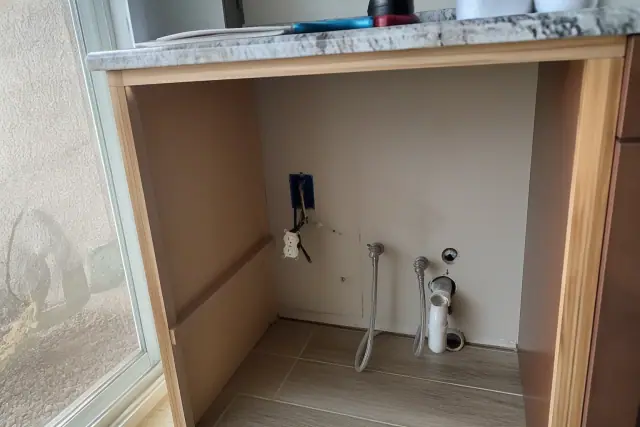
The seated power cord, outlet test, breaker position, and fully opened hot and cold valves. This establishes whether the washer has the basic inputs needed to start.
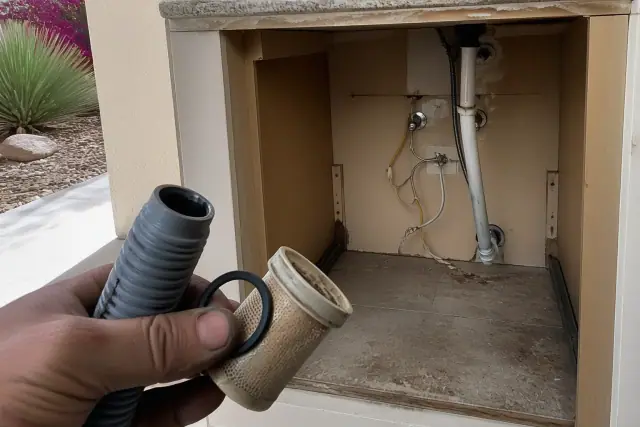
Where to look for a kinked hose, clogged filter, detergent residue, mineral scale, mold, rust stains, or a cracked front-load boot. These details separate routine buildup from a likely part failure.
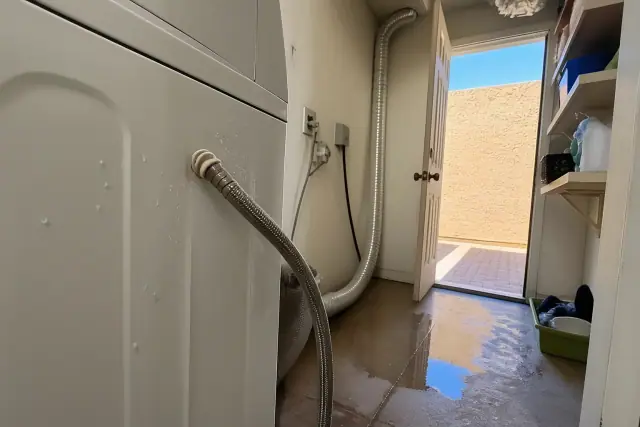
The display code beside written notes about the cycle stage, sound, odor, and where water appears. Specific observations help narrow the check to the pressure switch, sensor, pump, seal, belt, or motor control.
Confirm the outlet, 120-volt breaker, water valves, hoses, and lid or door latch before assuming the motor or control board has failed.
A failed lid switch, drain pump, or inlet valve on a washer under seven years old is a different decision from a major motor, control board, or bearing repair on a machine over 10 years old.
Arrange diagnosis when the washer still will not cycle, drain, or spin after the checks, or when you find a burning smell, active leak, loud grinding, or repeated breakdowns within the same year.
Do not assume shaking means motor failure before leveling all four feet and redistributing a heavy item, and do not mistake excess suds from standard detergent in an HE washer for a drainage failure.
| Washer Symptom | Check Before Calling | When Service Makes Sense |
|---|---|---|
| Will not start or fill | Test the outlet, reset the 120-volt circuit, open both supply valves, and check the lid or door latch. | Call if power and water are available but the cycle still will not begin. |
| Will not drain | Clear the filter and inspect the drain hose for kinks, lint, debris, or mineral scale. | A blocked or failed pump may cost $100 to $350 to repair. |
| Leaks, grinding, or burning odor | Stop the cycle and note the leak location, sound, odor, and any display code. | Arrange diagnosis for a seal, hose, bearing, belt, or motor-related fault. |
| Older washer with a major fault | Compare the repair quote with the cost of a comparable replacement. | The 50 percent rule and a typical 10-to-13-year service life can guide the decision. |
Start with power and water, then inspect the drain path and the load. Confirm the power cord is seated, test the outlet, check the breaker, open both supply valves, straighten the hoses, clean the filter and detergent drawer, wipe the gasket, level all four feet, and redistribute the load. Run an empty cycle only if there is no active leak or burning odor, then record the error code and the exact point where the cycle slows, stops, leaks, or makes noise. These checks take under ten minutes and may resolve a false alarm before a service call.
A washer that will not spin may have an unbalanced load, a lid-switch or door-lock fault, worn suspension parts, or a drive problem. Slow filling or unusually long cycles can point to a clogged inlet screen or pressure-switch issue, while water underneath may come from a tub seal, hose clamp, or cracked front-load boot. Grinding, squealing, and thumping can help distinguish bearings, a slipping belt, or an out-of-alignment drum. In Phoenix homes, hard-water scale can restrict a drain hose, while a closed front-load door between cycles can trap moisture around the gasket and contribute to mold or rust stains.
Common repairs include clogged drain pumps at $100 to $350, worn door seals at $150 to $300, suspension or shock-absorber corrections at $50 to $150, and front-load drainage repairs at $100 to $250. Across the Phoenix metro, washer repairs typically total $125 to $450, with most jobs around $180; labor generally runs $50 to $125 per hour, while a diagnostic call-out commonly runs $50 to $150 and covers travel plus the first hour. At Phoenix Appliance Repair Co., the diagnostic fee is applied toward an approved repair. A washer's typical service life is 10 to 13 years, so the 50 percent rule is useful: a 5-year-old washer with a failed inlet valve often merits repair, while an older machine with a major motor, control-board, or bearing fault may not. Common single-part repairs generally cost $100 to $350, compared with the typical $500 to $1,200 cost for a new mid-range washer, before installation, disposal, and water-line reconnection.
If the washer still will not cycle, drain, or spin after these checks, request a same-day diagnosis from Phoenix Appliance Repair Co. The team services major residential washer brands across Phoenix, Scottsdale, Tempe, and the surrounding Salt River Valley, a service area spanning more than 517 square miles. Technicians follow manufacturer service standards, use OEM or UL-listed replacement parts, and carry parts inventory intended to complete most repairs in one visit.